
How to Choose Window Treatments for Specialty Windows and Glass Doors
If you have uniquely shaped windows or doors, you have probably discovered that finding the right window treatments is not always as simple as picking something off the shelf.
Arched windows, French doors, bay windows, sidelights, and oversized expanses of glass can add character and visual interest to a space. They can also leave you wondering whether you have to choose between preserving their beauty and enjoying everyday comforts like privacy, light control, and energy efficiency.
The honest answer is that specialty windows and doors do require a little more planning.
The good news is that they also come with more possibilities than many people realize.
Whether you are updating your home, renovating a commercial space, or designing a brand new environment, understanding which types of window treatments work best for different applications and how the window or door will be used can make the decision much easier.
Let's take a closer look.
Specialty Shaped Windows
Arched, circular, angled, and triangular windows can add a lot of personality to a space. They often become focal points because they break away from the standard rectangular shape most people are used to seeing.
The challenge is figuring out how to cover them without sacrificing the architectural details that make them special.
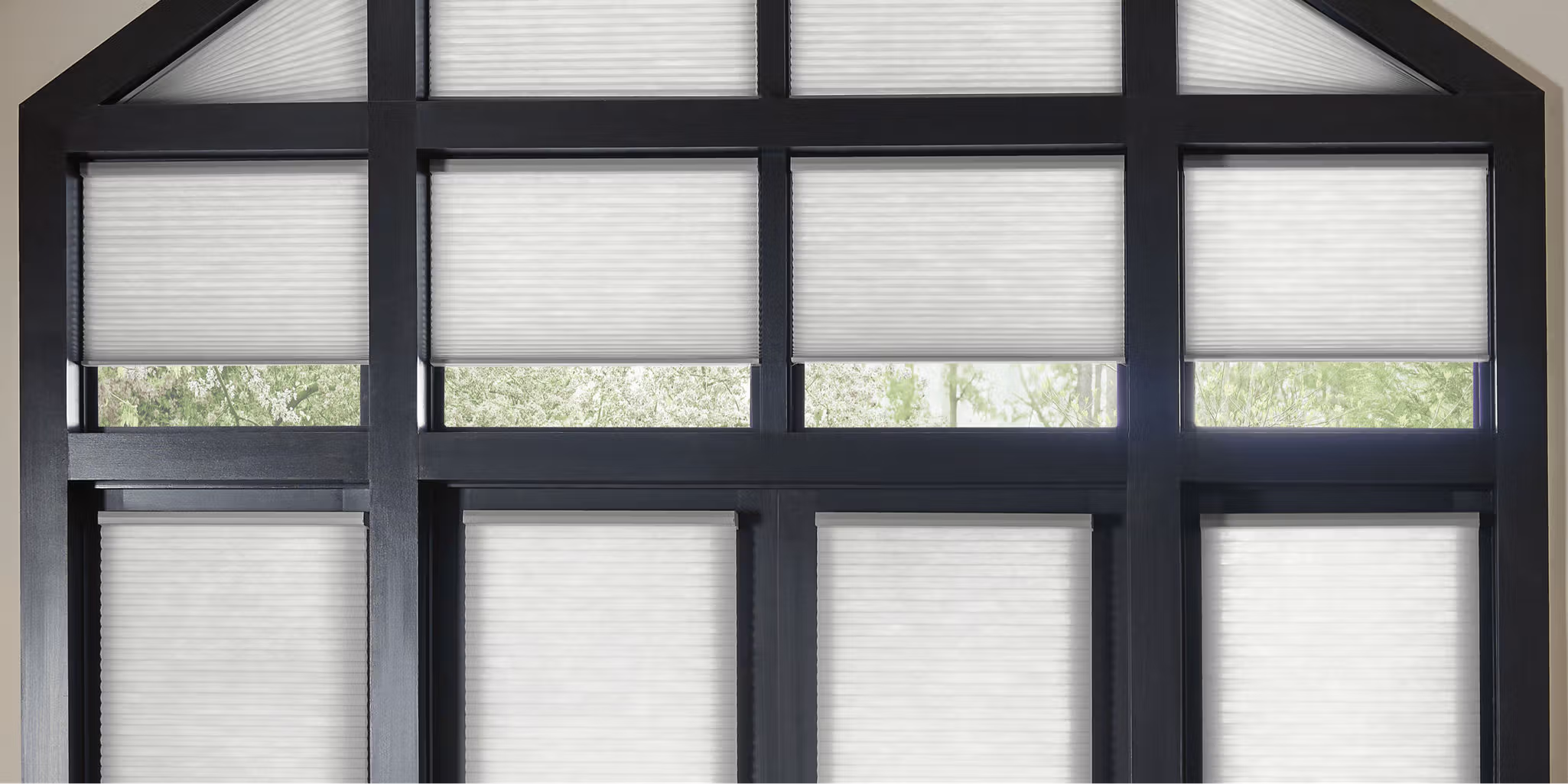
In some cases, the best solution is to leave the specialty portion of the window uncovered. For example, an arched window positioned above a standard rectangular window can sometimes benefit from treatments installed only on the lower section. This allows you to maintain privacy while preserving the shape and allowing natural light to filter through the upper portion.
When privacy and light control are important, custom-fitted shutters are often a good option because they can be designed to match unusual shapes. Rather than forcing a standard treatment onto a nonstandard window, shutters can follow the lines of the opening itself.
Drapery can also work well for specialty windows, particularly when the goal is to frame the feature rather than cover it completely. Mounted strategically, drapery can soften the appearance of a room while keeping the shape of the window visible.
Bay and Bow Windows
Bay and bow windows have a way of making a room feel larger, brighter, and more inviting.
In homes, they often become cozy reading nooks, breakfast areas, or favourite spots to enjoy the view outdoors. In commercial spaces, they can create welcoming waiting areas and add character to meeting rooms or client facing environments.
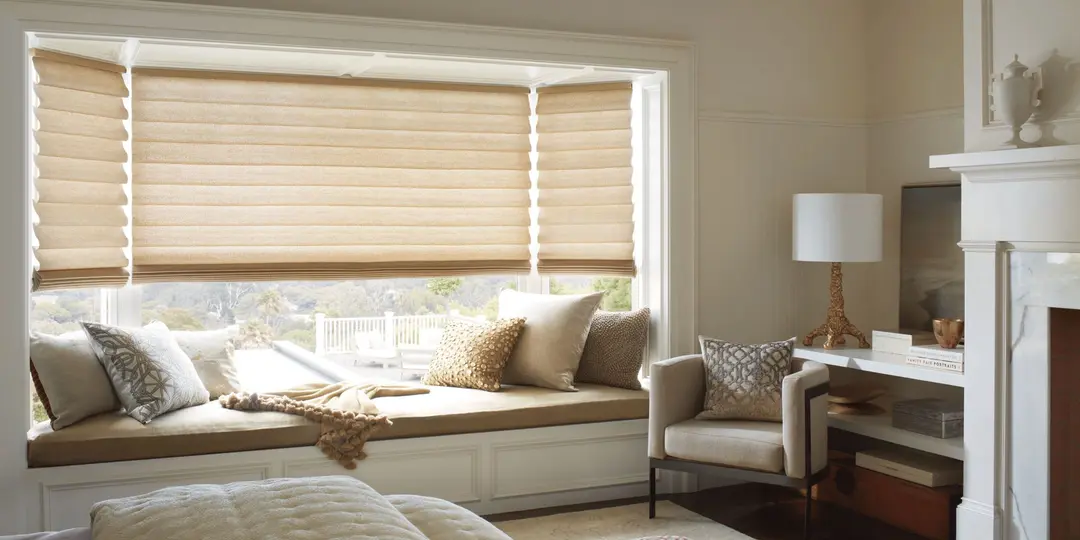
Because bay and bow windows consist of multiple panels extending outward from the wall, flexibility is often important.
Roller shades are frequently used on bay and bow windows because they can be operated individually. This makes it possible to adjust a single panel without affecting the others, which can be especially useful when managing changing sunlight throughout the day.
Roman shades offer another option. Since they fold neatly when raised, they provide privacy and light control while adding a softer, more decorative element to the space.
Cellular shades may also be considered for bay windows that experience noticeable temperature fluctuations. Because bay windows extend beyond the exterior wall, improving insulation around these areas is sometimes a priority.
French Doors
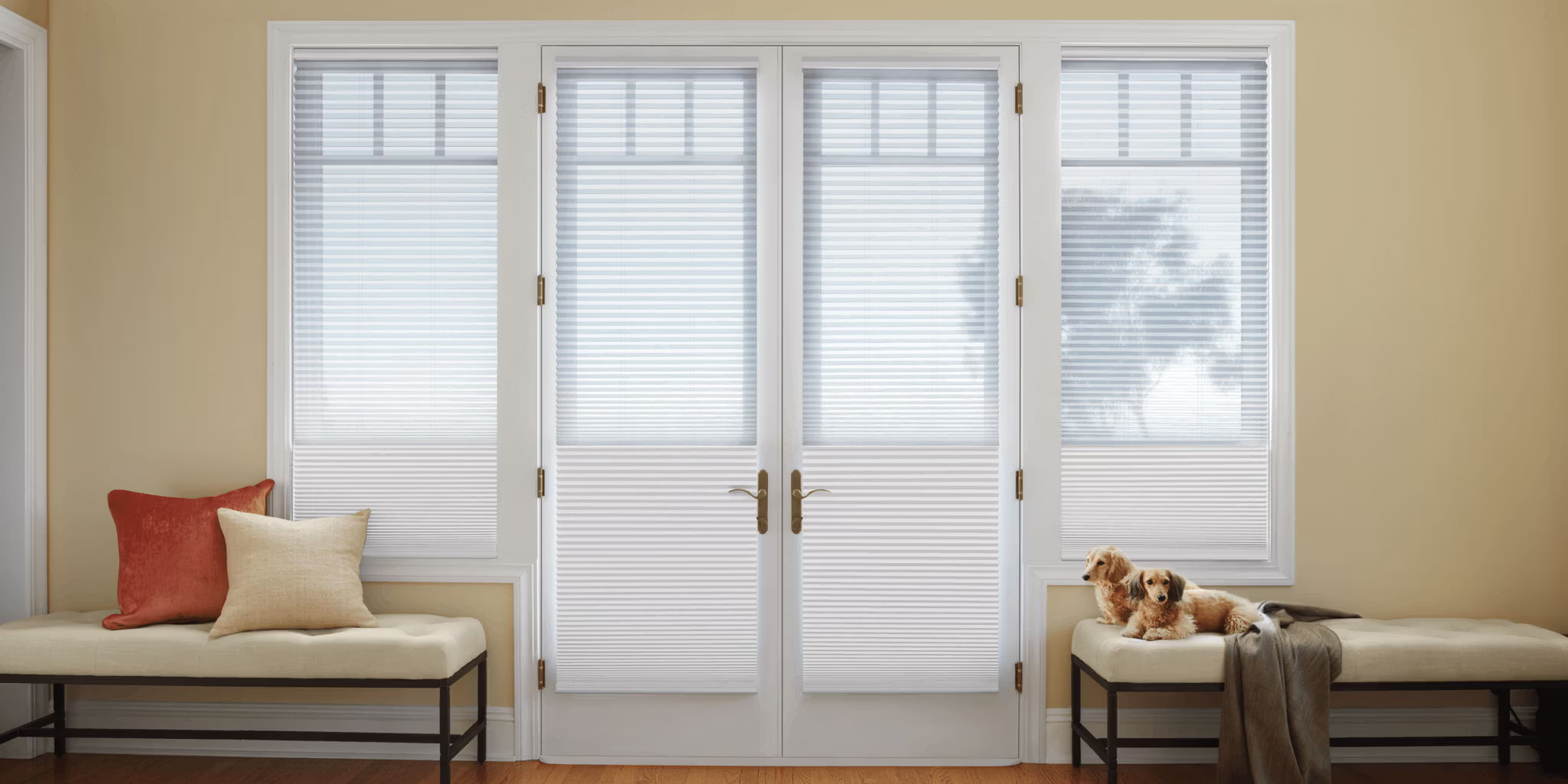
French doors are elegant, practical, and full of natural light.
They also happen to be among the more challenging areas to cover because they are designed for frequent use. A treatment that constantly gets caught in the door handle or swings around every time someone heads outside will quickly become frustrating.
This is one reason roller shades are often used on French doors. Their streamlined profile allows them to sit close to the glass, minimizing interference with the hardware and allowing the doors to open and close comfortably.
Cellular shades are another practical option, particularly on exterior French doors. Since large glass surfaces can contribute to heat loss in winter and heat gain in summer, the insulating structure of cellular shades may help improve comfort near the doors.
Shutters remain a popular choice because they are mounted securely to the door itself. Their adjustable louvres allow for varying levels of privacy and light control without requiring the entire treatment to be raised or lowered.
Front Doors and Sidelights
Front doors with glass inserts and sidelights can make an entrance feel bright and welcoming. At the same time, they can create concerns about privacy.
Many homeowners appreciate the natural light these windows provide but are less enthusiastic about feeling as though their foyer is on display, particularly in areas facing streets, sidewalks, or neighbouring properties. Businesses may face similar challenges, particularly when balancing an inviting atmosphere with the need for discretion.
Fortunately, several treatment options work well in these narrower spaces.
Shutters are commonly used on sidelights because they allow you to adjust visibility without entirely blocking daylight. Tilting the louvres provides control over both privacy and incoming light.
Roller shades can also be effective in these spaces. Their streamlined appearance complements many architectural styles, and they can be raised completely when unobstructed views are preferred.
Light-filtering treatments may be another consideration for those looking to maintain brightness while softening visibility from the outside.
Sliding Patio Doors and Large Glass Doors
Sliding doors serve an important purpose in both residential and commercial environments. They connect indoor and outdoor spaces, encourage the flow of natural light, and support everyday movement throughout the space.
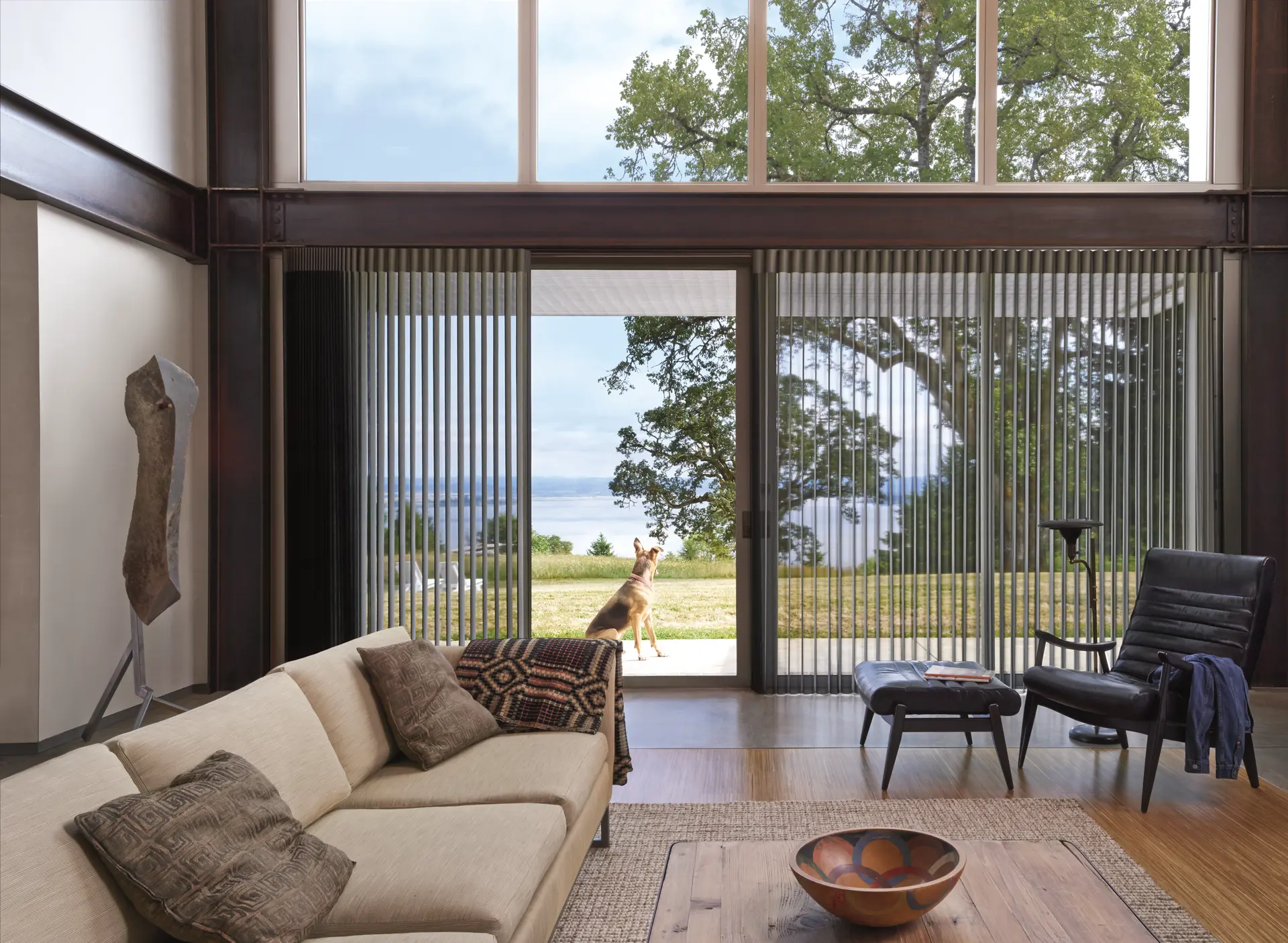
Because they are used so frequently, functionality becomes especially important when selecting window treatments.
Vertical blinds have long been associated with sliding doors because they stack neatly to the side and move in the same direction as the door itself. Their straightforward operation makes them suitable for both residential and commercial environments.
Panel track systems function similarly but feature wider fabric panels. They are often chosen for contemporary interiors where a clean, streamlined appearance is desired.
Vertical cellular shades provide another alternative. In addition to accommodating door movement, they can improve insulation around large expanses of glass.
Selecting treatments that complement the door's operation helps ensure convenient access without compromising functionality.
Oversized Windows
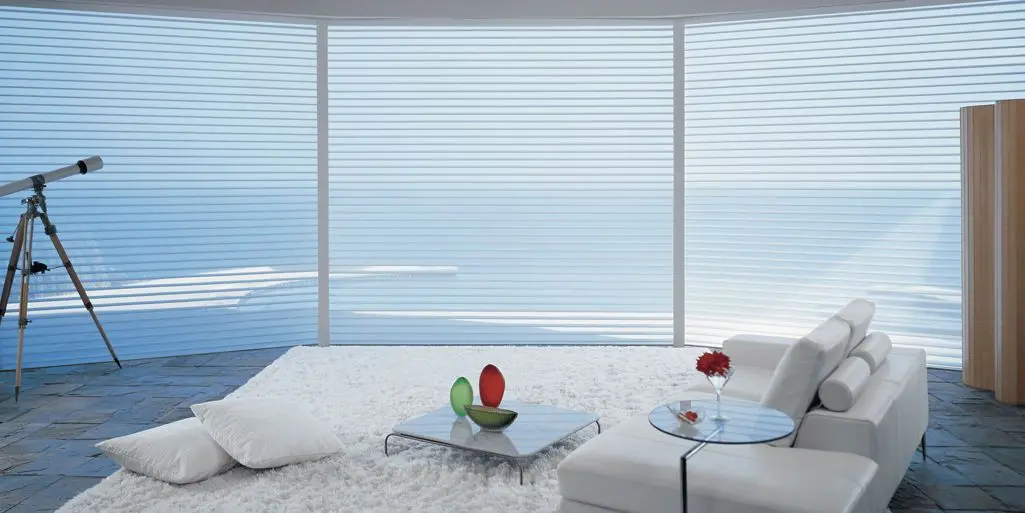
Large windows continue to grow in popularity, and for good reason. They maximize natural light, showcase outdoor views, and help create bright, open environments. In commercial settings, they can contribute to employee wellbeing and enhance the overall experience for customers and visitors.
However, oversized windows also come with their own set of considerations.
Glare can make screens difficult to view. Rooms may become uncomfortably warm during certain times of the day. Furnishings and flooring exposed to prolonged sunlight may experience fading over time.
Solar shades are frequently used in these situations because they help reduce glare while preserving outward visibility. This can be especially beneficial in offices where computer screens are used regularly or in living areas with televisions.
Roller shades offer flexibility through a range of opacity levels, allowing different degrees of light control depending on the needs of the space.
Motorized systems are often incorporated into oversized windows as well. Since large windows can be difficult to reach manually, motorization provides a convenient way to adjust treatments throughout the day.
What to Consider Before Making Your Decision
Before choosing a window treatment for a specialty window or door, ask yourself a few simple questions:
How much privacy does the space require?
How much natural light do you want to maintain?
How often will the treatment be adjusted?
Is energy efficiency a priority?
Do you want to preserve a view or highlight an architectural feature?
The answers can help narrow down your options and guide you toward a solution that works for both the space and the people using it.
Finding the Right Fit
Uniquely shaped windows and doors may require a little extra planning, but they do not have to limit your options. With the right window treatments, you can enhance privacy, improve light control, and complement the architectural features that make your space stand out.
If you have a specialty window or door in the Fredericton area and are unsure where to start, Tommy's Flooring is here to help. Our team of window treatment specialists can guide you through the options and help you find a solution that fits the way you use your space. Reach out to us to schedule a consultation.